Meatpacking workers joined unions to fight for improved working conditions.
|
The Amalgamated Meat Cutters and Butcher Workmen of North America stabilized some labor rights in the early 1900s.
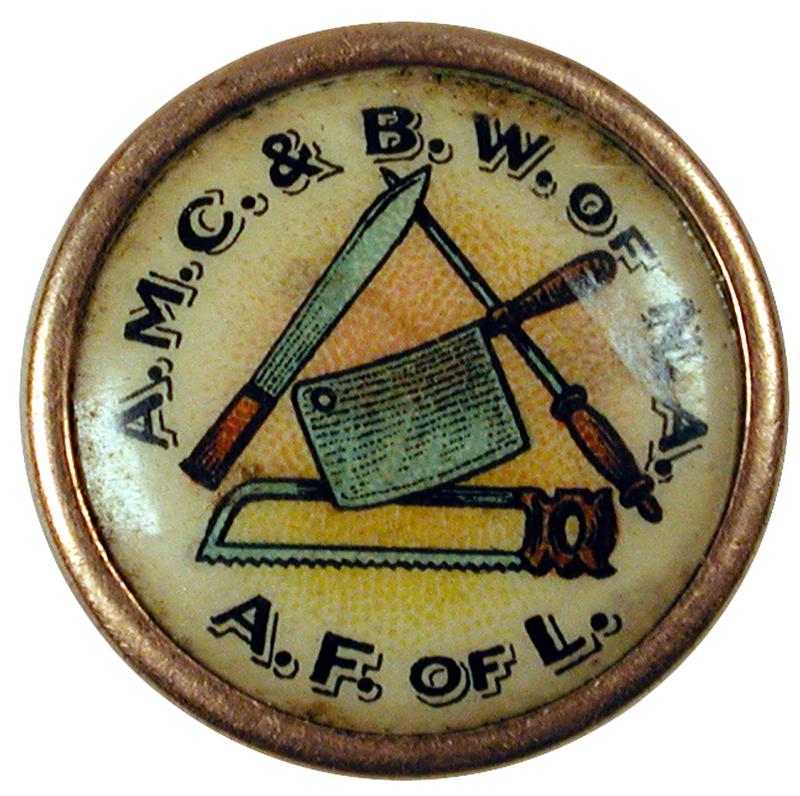
[American Federation of Labor's Amalgamated Meat Cutters and
Butcher Workmen of North America Pin.] |

[Chicago Daily News. Labor Day parade, meat cutters wearing checkered overcoats marching in parade. 1908.]
|
|
However, an unsuccessful national strike in 1904 for an 18.5 cent hourly minimum wage injured the union.
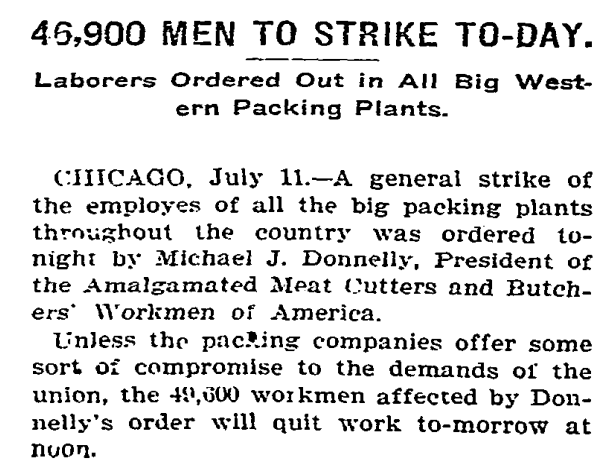
[The New York Times, 12 Jul. 1904.]
|
“We consider the demand of the union for an advance in wages of unskilled labor entirely unwarranted by industrial conditions. We could not concede it, and proposed to submit the question to arbitration, which the union declined. Every department is kept running, however. We have had applications from hundreds of unemployed men for positions at less wages than we have been paying, and every day expect to increase our output.”[Arthur Meeker, Armour & Co. Packing House Strike Involves 45,000 Men. The New York Times, 13 Jul. 1904.] |
|
[Taken during 1904 stockyards strike. Chicago Daily News.]
|
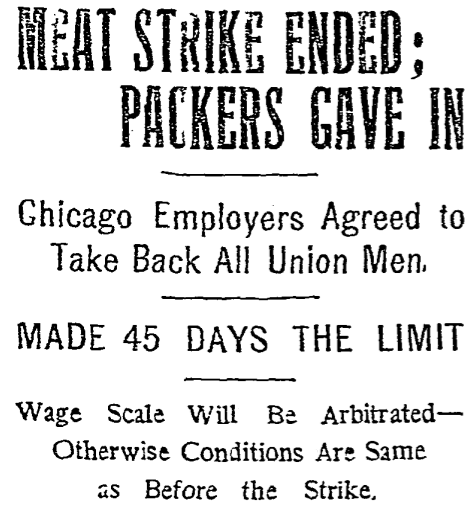
[The New York Times, 21 Jul. 1904.]
|
Union dissolution was common; most strikes ended before they began due to the beef trust’s practices of utilizing spy networks, blacklisting unionized employees, and hiring non-unionized replacement labor known as ‘scabs’.
“The spy system ... stands in the way of any organization of the workers. ... [N]o widespread movement among the men is in any way possible without its details being known by the employers, which, with a union, would certainly mean its instant destruction.”[A. M. Simons. Packingtown. The Pocket Library of Socialism. 1899.] |
“Not infrequently some 'labor leader' comes among them and urges them to ... call a strike. But the old employe [sic] ... has seen the rise and fall of union after union in the Yards and has marked the failure of many a strike until he has come to realize that something ... makes it well nigh hopeless to combine for an economic fight against the employers. So it has come about that there are practically no unions in the Yards.”[A. M. Simons. Packingtown. The Pocket Library of Socialism. 1899.] |
Although other meatpacking unions eventually formed, unions divided by ethnicity and skill, with continued meat trust efforts to create separation and strife among its workers, diminished the focus on universal rights.
